Stop Planning Around Carrier ETAs That Change the Day Before Arrival
Portcast's predictive ETA software forecasts when your containers will actually arrive, typically 15% better than carrier-reported times and 2 to 4 weeks ahead, and tells you where the delay hits and why. Built on data verified against live vessel tracking, it predicts at the milestone level, not just a single arrival date, giving your team ocean freight visibility they can plan around.
Talk to our team.png)
Carrier ETAs Are Wrong More Often Than You Think, and They Don't Tell You Why
Carrier-reported arrival times change late, often in the final days before arrival, and rarely come with a reason. Planning your downstream operations around a number that shifts without warning means constant firefighting, missed pickups, and last-minute costs. To plan with confidence, you need an arrival time you can trust days and weeks out.
Late Changes
Carrier ETAs often shift in the 24 to 72 hours before arrival, too late to replan around.
No Explanation
When an arrival time moves, carriers rarely tell you why, so your team is left guessing.
Disruption Blindspots
Carrier ETAs show where a shipment is today, not how congestion, weather, or strikes could change its arrival next.
What Is Predictive ETA Software?
Predictive ETA software uses machine learning to forecast when a container will actually arrive, rather than repeating what the carrier last reported. Carrier tracking portals reflect a single data source, updated at the carrier's discretion. Predictive ETA tools instead weigh many independent signals to model the real arrival time: live vessel position, carrier schedule changes, port congestion, historical lane performance, and market insights such as geopolitical events, port closures, and weather incidents.
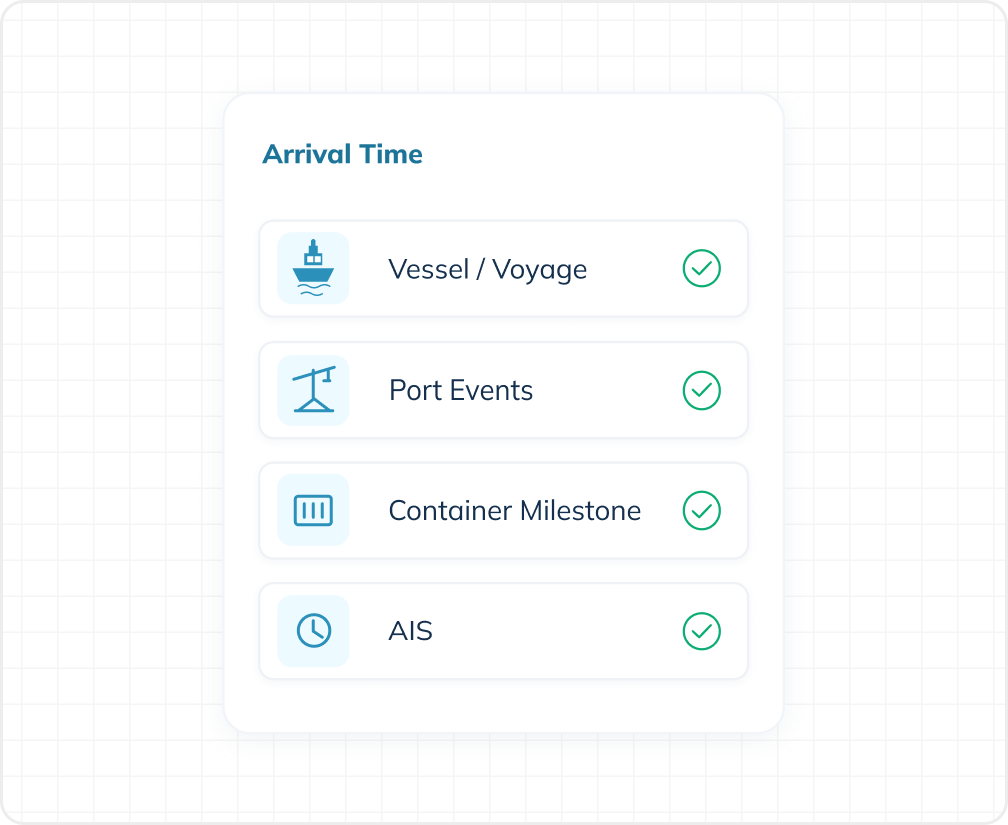
Portcast's predictive ETA software is built specifically for ocean freight. Its domain-specific machine learning models draw on more than 70 data sources, with journey data continuously validated against live vessel AIS, carrier, and terminal data, making its predictions more reliable.
Portcast predicts at the milestone level, forecasting vessel berthing, container discharge, customs clearance, and gate-out availability, not just a single arrival date. But predicting when a shipment will arrive is only part of the value. Portcast also shows where the delay is likely to hit and why. Whether the issue is vessel congestion, port delays, discharge, customs, or another disruption, Portcast explains what is driving the ETA change, giving teams the context they need to plan ahead and take action.
Key Features of Portcast's Predictive ETA Software
AI-Predicted ETAs Built for Ocean Freight
Portcast's predicted ETAs and ETDs are typically 15% more accurate than carrier-provided times, even 2-4 weeks before arrival. Powered by domain-specific ML and continuously recalculated as conditions change, predictions stay stable throughout the voyage instead of shifting at the last minute. With milestone-level predictions, Portcast shows exactly where a delay is occurring and why, not just the revised arrival date.
Predicted ETAs typically 15% better than carrier ETAs, up to 2 to 4 weeks ahead
Forecasts at milestone level: berthing, discharge, customs clearance, and gate-out availability
Recalculated continuously as vessel position, congestion, and schedules change
Original and latest carrier ETAs retained alongside the prediction, to benchmark carrier performance
Every ETA change comes with the milestone it hits and the reason behind it, from port congestion to customs to weather disruptions

Built on Data Verified Against Live Vessel Tracking
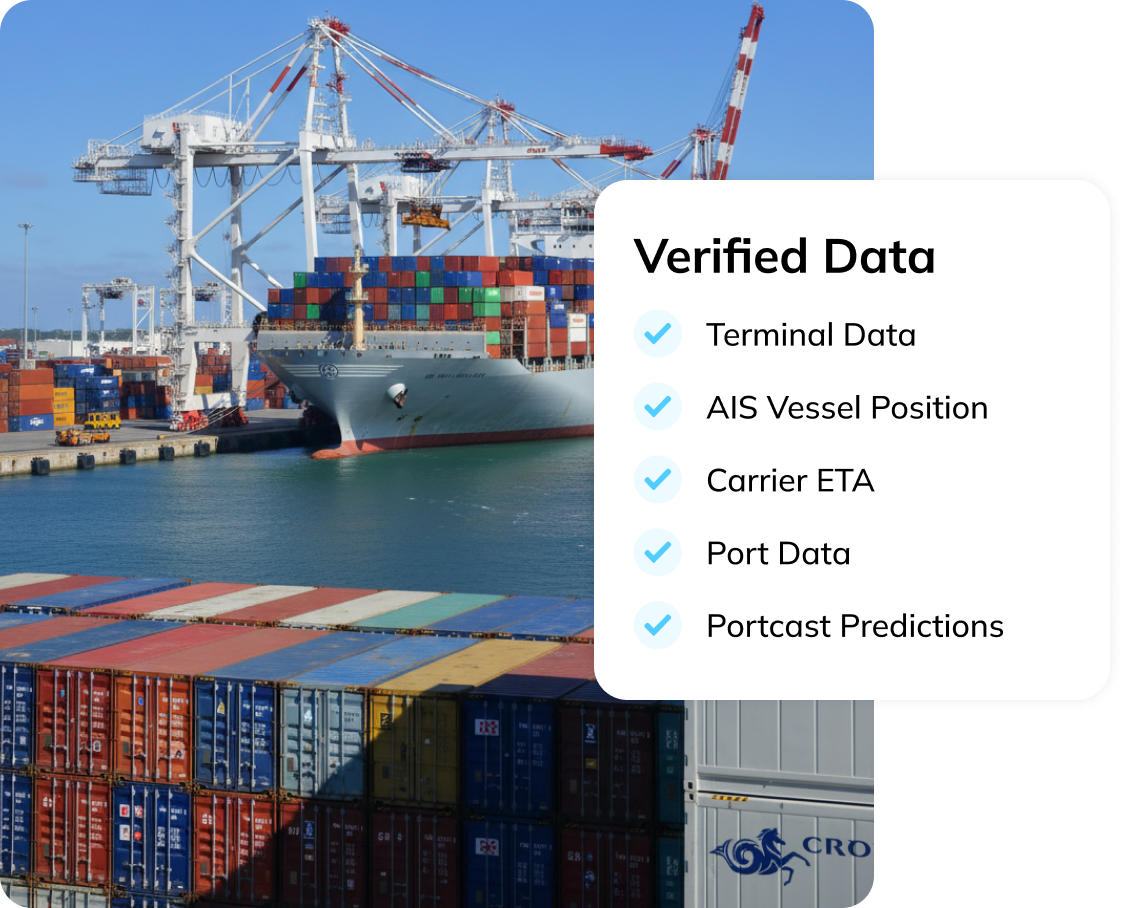
A prediction is only as good as the data beneath it. Portcast combines carrier milestones with live vessel AIS tracking, geofenced port data, and terminal events, and where sources disagree, it surfaces the difference. That verified foundation is what makes the predicted ETA on top of it trustworthy.
Carrier milestones cross-checked against live AIS vessel data for accuracy and lower latency
Multiple independent sources combined for a broader, more complete view of the journey
AIS-observed departure and arrival times surfaced where they differ from carrier reporting
Every data point automatically validated before it reaches your prediction
Delay Reasons and Root Cause, Explained
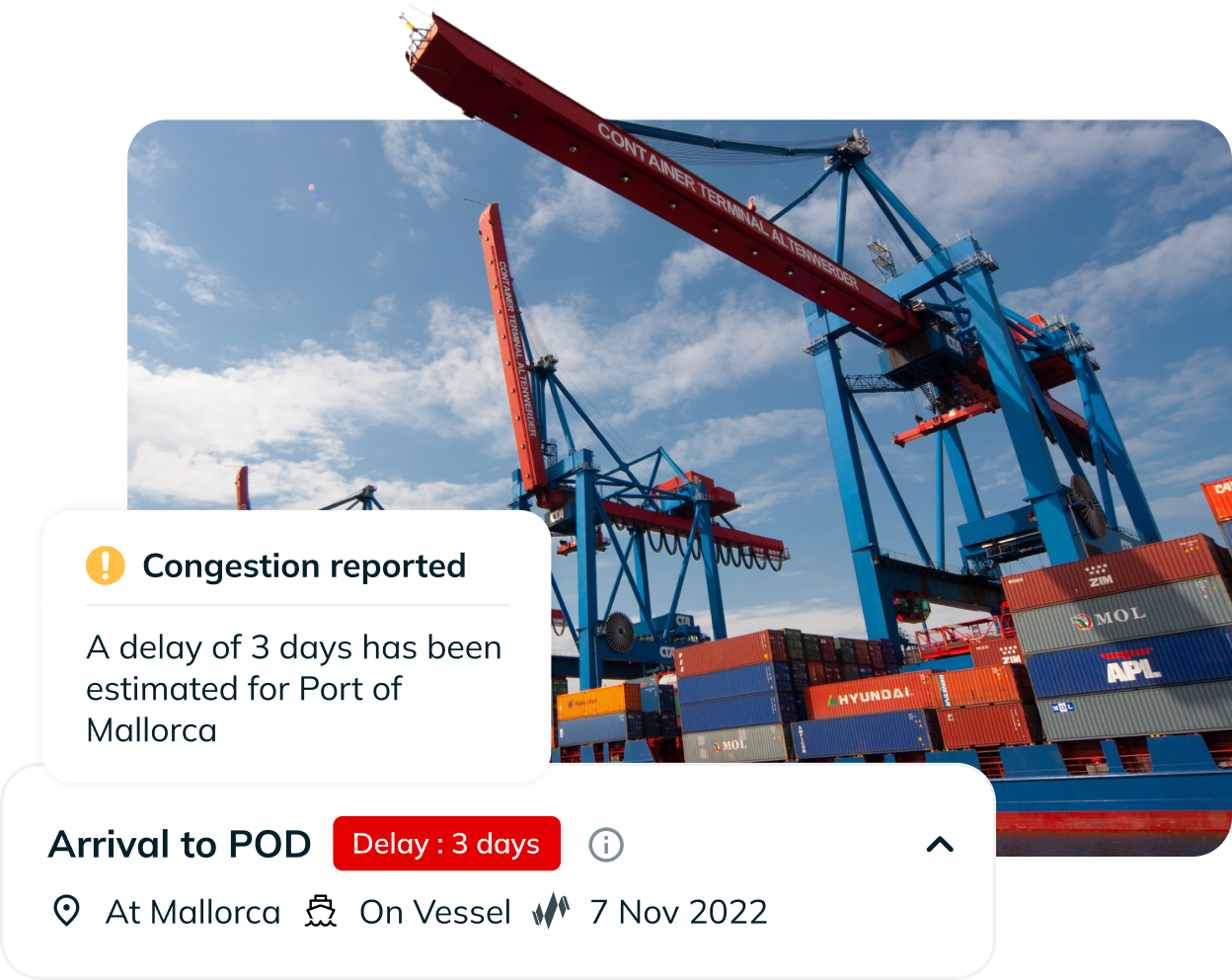
When a predicted arrival shifts, Portcast tells you where the delay hits and why. Because it predicts at the milestone level, it can point to the exact stage that is slipping, whether it is vessel congestion, a port delay, discharge, customs, or another disruption, and surface the cause behind it. That turns a change in ETA into context your team can act on and communicate, rather than a silent new date.
Pinpoints which milestone is driving the delay: berthing, discharge, customs, or gate-out
Identifies the cause: adverse weather, port congestion, a non-optimal vessel route, or disruption
Flags every container affected by a given disruption, so you can act across your book at once
Turns a shifting ETA into a proactive customer update instead of a reactive scramble
Visibility That Holds Even When Carrier Data Stops
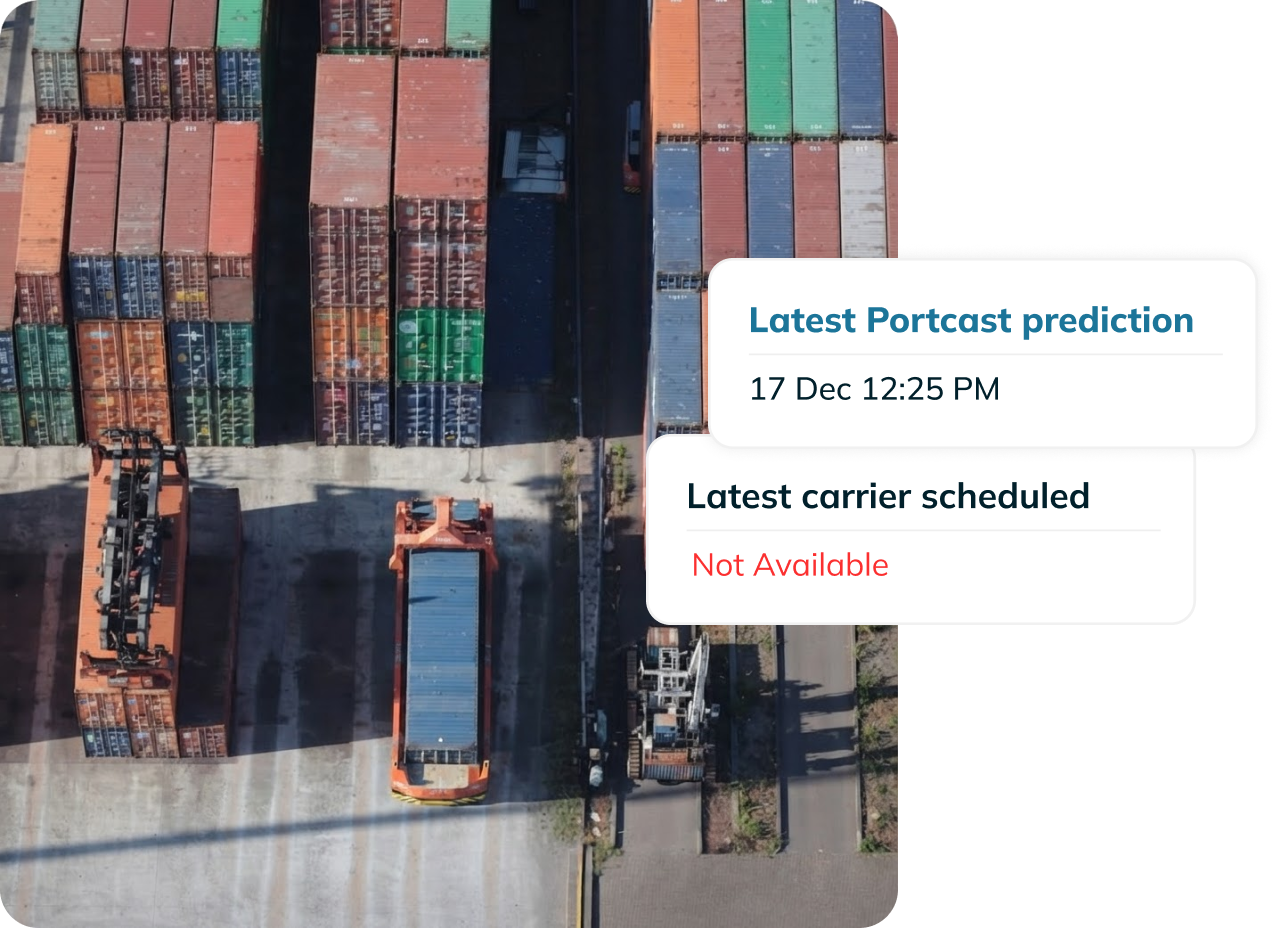
Carrier data goes quiet more often than teams expect. Portcast reduces the latency of milestone updates and maintains visibility even when a carrier stops providing data, by drawing on multiple independent sources for a fuller picture of where your container actually is.
Multiple data sources give more than one perspective on container movement
Visibility maintained through gaps when carrier feeds go silent
Lower-latency milestone updates than carrier reporting alone
Congestion factored directly into predictions, combining port updates and geolocation data
Predictive ETA is one layer of Portcast's connected visibility. See how it builds on real-time container tracking.
How Portcast's Predictive ETA Works
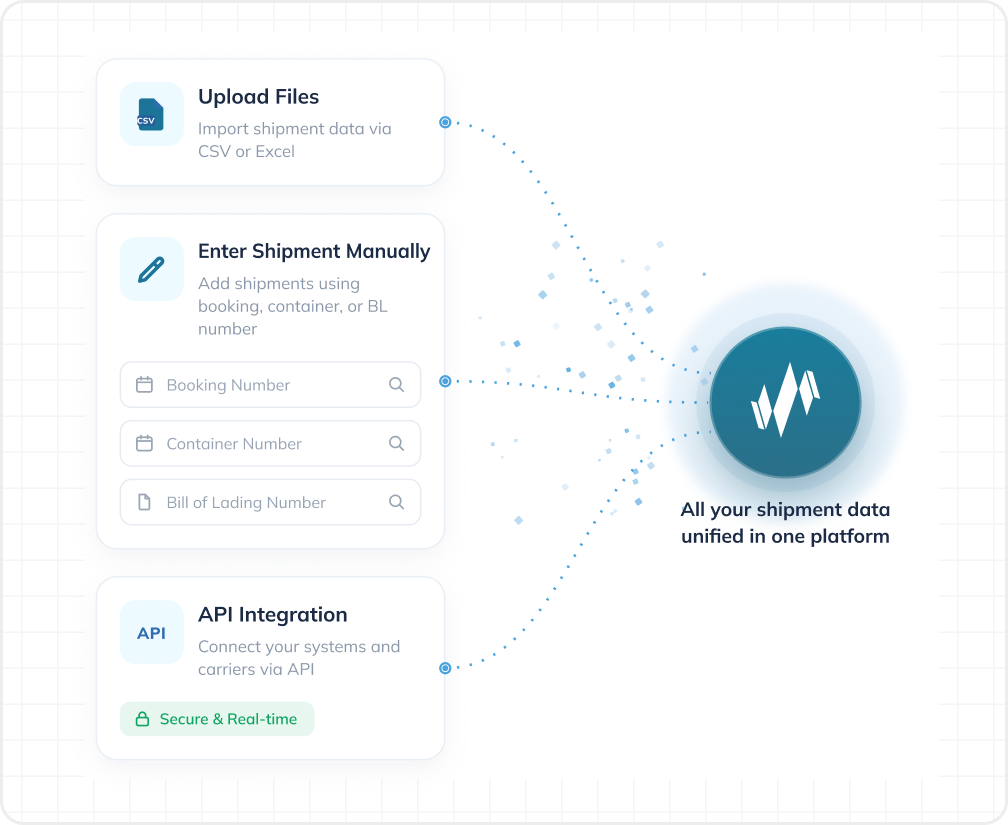
Three steps from search to plan, with congestion data included at each stage.
Carrier ETAs vs Portcast Predictive ETAs
The difference between a carrier ETA and a Portcast predicted ETA is the difference between reacting and planning.


Hear What Our Customers Are Saying
From predicting arrivals weeks ahead to catching disruptions early, here is how Portcast customers plan with confidence.
"The most powerful functionality is predictive ETA, complemented by a complete end-to-end view of ocean events. It gives us the best accuracy of prediction and completeness of ocean view."
%201.svg)
“Portcast enabled us to offer customers a seamless tracking experience, strengthened relationships, and opened up substantial growth opportunities.”

“Portcast helps you to predict at an early stage how outside circumstances like weather, port congestion, and strikes may impact your and your customer's downstream processes.”

“Portcast has been a game-changer for us. By aligning ETAs with reality, we eliminated the noise around payments and gained complete clarity on our exposure.”
.png)
Predictive Visibility for Every Team That Plans Around Ocean Freight
Shippers and BCOs
Align pickup, customs, and production planning to arrival times you can trust, and get early warning when a shipment is at risk, before it affects your operation.
Freight Forwarders and 3PLs
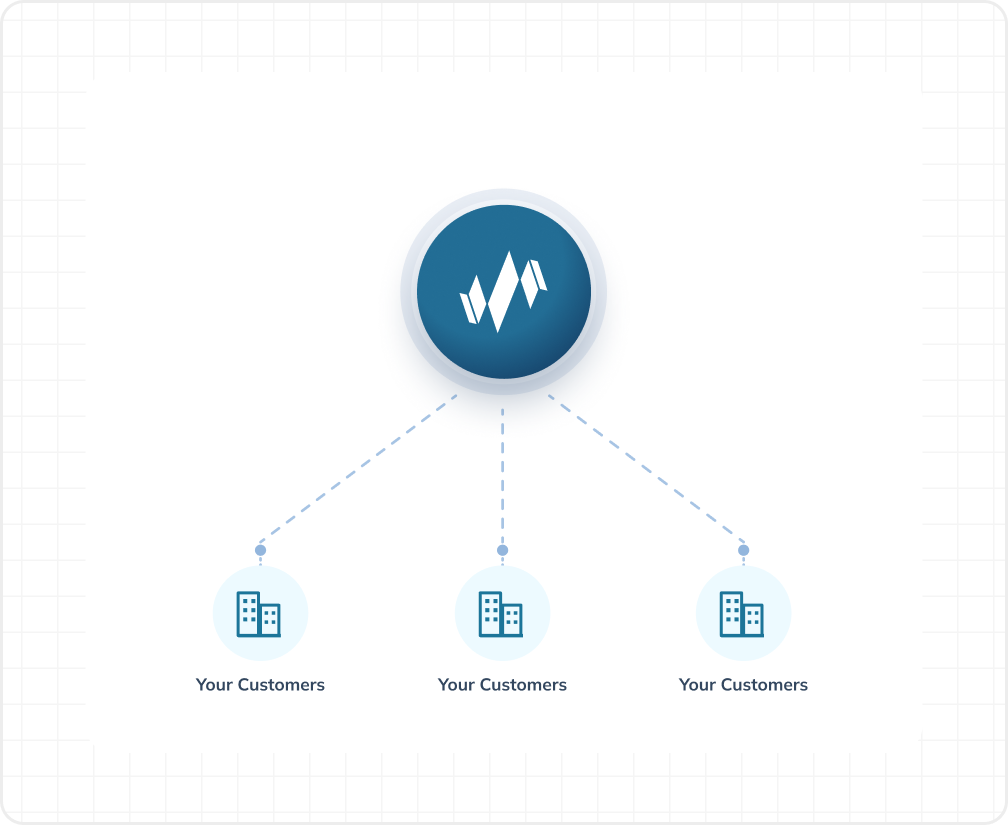
Give your customers proactive updates instead of "let me check with the carrier," backed by predicted ETAs and delay reasons across your whole book. Deliver it via API or a fully white-labeled experience under your own brand.
Supply Chain and Procurement
Use predicted arrivals and carrier-performance data to plan and negotiate. Benchmark carriers by lane against the market, and feed reliable arrival data into your forecasting and procurement decisions.

Predictive ETA Software: Frequently Asked Questions
Any other question that isn’t mentioned? Don't hesitate to get in touch.
How accurate are Portcast's predictive ETAs?
How is predictive ETA different from carrier tracking?
Can container tracking software predict port congestion?
What data sources power Portcast's ETA predictions?
What happens when a carrier doesn't update its data?
How far in advance can Portcast predict container arrival?
How does Portcast explain why an ETA changed?
Is there an API for predictive ETA data?
What is ocean freight visibility?
Learn More About Predictive Visibility



Plan Around Arrival Times You Can Actually Trust

 Get a Demo
